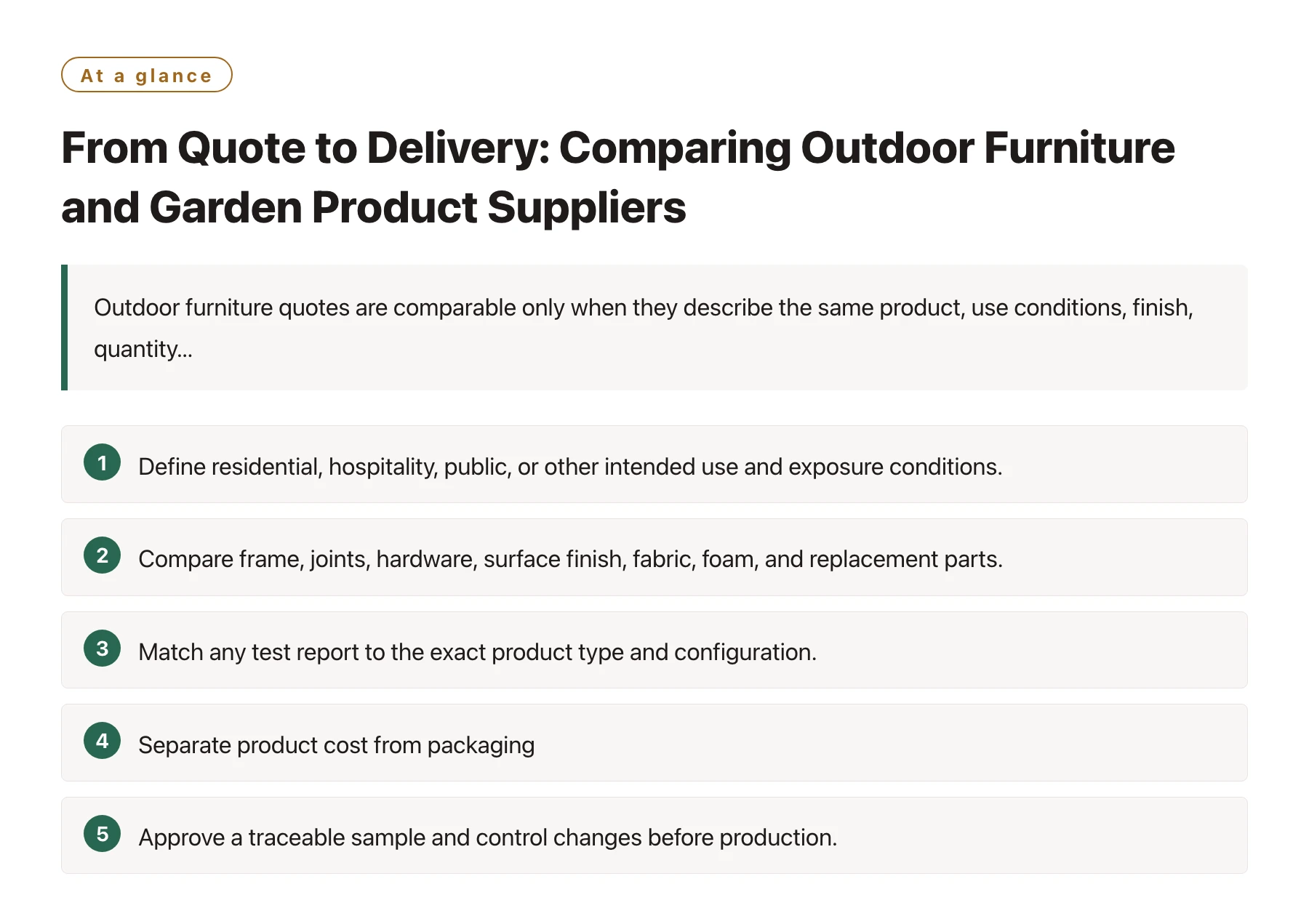
Outdoor furniture quotes are comparable only when they describe the same product, use conditions, finish, quantity, packaging, and delivery scope. A chair photographed in a showroom may not represent a commercial patio chair exposed to sun, moisture, handling, and frequent use. Before selecting a supplier, align the product specification and evidence plan with where and how the furniture will be used.
Key takeaways
- Define residential, hospitality, public, or other intended use and exposure conditions.
- Compare frame, joints, hardware, surface finish, fabric, foam, and replacement parts.
- Match any test report to the exact product type and configuration.
- Separate product cost from packaging, freight, assembly, and after-sales assumptions.
- Approve a traceable sample and control changes before production.
A useful comparison connects each quote to a controlled product configuration and a realistic service environment.
1. Define the setting before comparing materials
Record whether the furniture is intended for a private garden, hotel terrace, restaurant, pool area, or public space. Note expected occupancy, frequency of use, storage between seasons, proximity to salt spray or pool chemicals, direct sun, rainfall, and cleaning routine. Those details influence material, finish, maintenance, and replacement expectations.
A requirement written only as “outdoor grade” leaves room for competing interpretations. State location, exposure, intended service, design life if specified, and any applicable buyer or market requirements. Confirm whether cushions remain outdoors or are removed and stored.
2. Compare construction and joinery
For metal frames, compare alloy or steel grade where specified, wall thickness, weld quality, drainage, corrosion protection, and isolation between dissimilar metals. For timber, name the species or approved alternatives, moisture condition, finish system, joinery, and maintenance instructions. For resin or plastic products, compare polymer identification, reinforcement, UV-related claims, wall design, and color consistency.
Inspect the load path through legs, arms, rails, hinges, and fasteners. Ask how folding or adjustable mechanisms lock and how wear parts can be serviced. A heavier item is not automatically stronger; compare the specified dimensions and test evidence that are relevant to the intended use.
3. Treat fabric, cushions, and finishes as separate systems
Specify textile composition, color reference, weave or coating, seam construction, zipper and closure details, foam type, drainage, and whether covers are removable. Clarify which color variation is acceptable and how finished goods will be compared with the approved sample. Ask for care guidance tied to the proposed material rather than generic outdoor claims.
For coatings and wood finishes, list substrate preparation, coating layers, target appearance, inspection method, repair process, and limits of warranty. Ask whether hardware, weld areas, edges, and underside surfaces receive the same protection as visible faces. Agree on how scratches, pinholes, fading, mildew, or finish variation will be assessed.
4. Match standards and reports to the actual product
Request the complete designation, edition, laboratory, model, configuration, and test scope for any referenced standard or report. ASTM F1988-99(2020), for example, is limited to specified plastic chaise lounges with adjustable backs; its scope excludes upholstered chairs and other furniture types. It describes selected performance aspects and does not establish that every garden product is covered. [1]
Do not treat a report for one chair or chaise as evidence for a table, bench, parasol, or a different construction. Have the qualified compliance owner identify destination-market obligations and additional hazards. A standard can help define a test basis, but the buyer still needs product-specific limits, sampling, and acceptance decisions.
5. Review the sample under representative conditions
Identify supplier, factory, model, revision, materials, finish, and sample status on each candidate. Assemble it with the quoted hardware and instructions. Check fit, rocking, alignment, sharp edges, pinch points, exposed fasteners, stability on the intended surface, drainage, fold locks, and consistency between components. Photograph and record observations.
A short indoor review does not demonstrate long-term outdoor durability. Where useful, plan specialist tests for load, stability, corrosion, weathering, colorfastness, or textile performance. Define specimen count, conditioning, pass limits, report owner, and whether the test is destructive. Avoid extrapolating from a test that does not match the product or exposure.
6. Make quotes comparable line by line
Normalize the request for quotation: model and options, materials, finish, cushion set, accessories, minimum order, tooling, sample charge, production lead time, payment terms, packaging, spare parts, warranty, and shipment basis. Separate one-time charges from unit price. Ask vendors to list exclusions and assumptions instead of hiding them in a short total.
Compare packed dimensions, carton protection, assembly labor, replacement availability, and after-sales response. A low unit price can shift cost into custom packaging, spare hardware, high freight volume, or limited service. Record each assumption and ask every supplier the same clarification questions.
7. Establish production controls and approval records
Use a signed sample or controlled photo set tied to a specification and revision. Record dimensions, material declarations, finish, color, hardware, accessories, assembly instructions, labels, and packaging. State which features are visual references and which have measurable acceptance limits. Keep the reference protected from sunlight, moisture, or handling that could change it.
Name who can approve a deviation and how a change to factory, material, coating, supplier, or design is reviewed. Define production checks, defect classification, sample selection, corrective action, and shipment release authority. Require suppliers to disclose substitutions before production, not after a nonconforming lot is packed.
8. Plan packing, delivery, and seasonal service
Outdoor furniture can be bulky and vulnerable to abrasion, crushing, moisture, and finish damage in transit. Specify carton strength or protective method where needed, corner and surface protection, hardware bag identification, stacking limits, pallet rules, and container loading expectations. Ask for a packing sample for products with delicate finishes or complex assembly.
Estimate total landed cost with the same units, carton data, freight assumptions, duties, and destination handling for every offer. Confirm spare-part coding, warranty start, care documents, and response path. For project deliveries, schedule receiving and installation capacity so products are not stored outdoors before use.
9. Turn supplier selection into a controlled sourcing decision
Score mandatory requirements first: intended use, product configuration, safety and compliance evidence, fit, critical performance, packaging, and order terms. Only then compare preferences such as color options or design details. Mark missing evidence as pending rather than giving a favorable score based on a sales statement.
Buyers comparing suppliers through Learn more should provide a consistent brief and ask each candidate to identify manufacturing location, product scope, quote exclusions, sample status, and evidence gaps. Before release, confirm that the approved sample, purchase order, inspection plan, and delivery documents describe the same product.
Sources
Frequently asked questions
What should an outdoor furniture quote specify?
It should identify model, materials, dimensions, finish, cushions and accessories, quantity, packaging, lead time, price basis, warranty, exclusions, and the product evidence included.
Does one outdoor furniture test report cover a full product range?
Usually not automatically. Confirm that the report names the relevant model, construction, configuration, and test scope; different furniture types may need separate evaluation.
How should buyers compare garden furniture finishes?
Use named substrates, finish systems, color references, inspection conditions, accepted variation, maintenance instructions, and an approved sample for the quoted version.
When should a supplier submit a new sample?
Request a new sample when a design, material, factory, finish, component, or intended-use change could affect fit, durability, safety, appearance, or compliance.